Table of Contents
Understanding your menstrual cycle is like getting a user manual for your own body. While every person’s experience is unique, research shows that most menstruating individuals follow a predictable pattern of hormonal changes that create four distinct phases. Let’s explore what’s actually happening during each phase and how this knowledge can help you better understand your body’s natural rhythms.
Why Understanding Your Cycle Matters
Your menstrual cycle isn’t just about menstruation—it’s a complex monthly process that affects your energy, mood, metabolism, immune function, and even how your brain processes information. Recent research has shown that hormonal fluctuations throughout the cycle can influence everything from sleep patterns to creativity levels, making cycle awareness a valuable tool for optimizing your wellbeing.
The Four Phases: An Overview
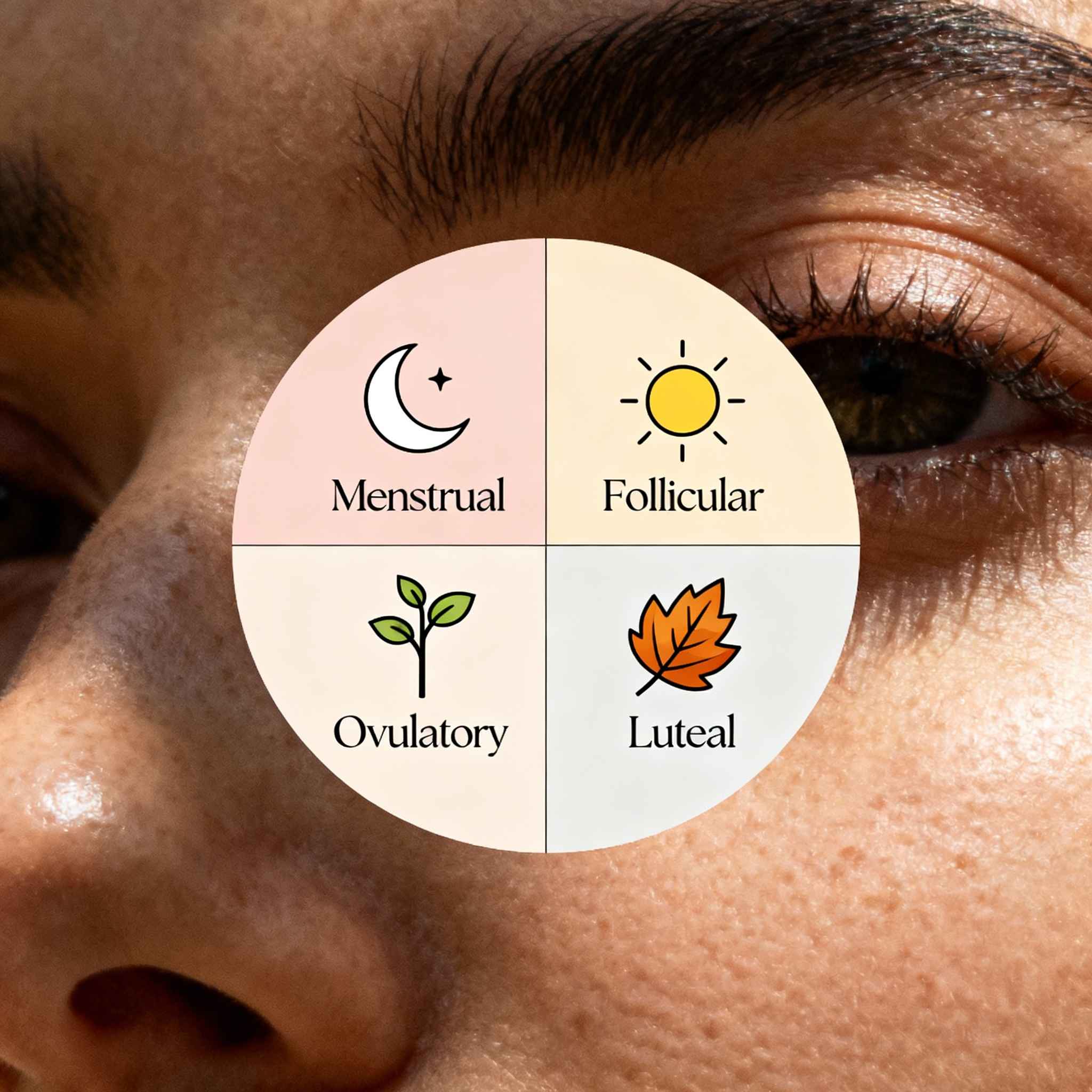
Think of your cycle as a carefully orchestrated dance between your brain, ovaries, and uterus. This dance typically lasts 21-35 days (with 28 days being average, not universal), and involves four main phases:
- Menstrual Phase (Days 1-7)
- Follicular Phase (Days 1-13)
- Ovulatory Phase (Around Day 14)
- Luteal Phase (Days 15-28)
Note that the follicular and menstrual phases overlap—your body is simultaneously shedding the previous month’s uterine lining while preparing for the next potential pregnancy.
Phase 1: Menstrual Phase (Days 1-7)
What’s happening hormonally: Estrogen and progesterone drop to their lowest levels, triggering the shedding of your uterine lining. This decrease also signals your brain to start the next cycle by releasing follicle-stimulating hormone (FSH).
Physical changes: You’ll experience menstrual bleeding as your body sheds the endometrium (uterine lining). Many people also experience cramping as the uterus contracts to help expel the lining. Energy levels often dip during the first few days.
What research shows: Studies indicate that pain tolerance may be lower during menstruation, and some research suggests that the drop in hormones can affect mood regulation. However, many people report feeling a sense of relief or “reset” as hormone levels stabilize.
Individual variation: Menstrual flow can last anywhere from 3-7 days, with total blood loss typically ranging from 30-40ml (despite it often feeling like much more!). Cramping intensity varies significantly between individuals.
Phase 2: Follicular Phase (Days 1-13)
What’s happening hormonally: FSH stimulates your ovaries to develop several follicles, each containing an egg. Usually, one dominant follicle emerges and begins producing increasing amounts of estrogen. This rising estrogen helps thicken your uterine lining in preparation for a potential pregnancy.
Physical changes: As estrogen rises, many people experience increased energy and improved mood. Skin often looks clearer, and you might feel more motivated to be social or try new activities.
What research shows: Studies suggest that rising estrogen during the follicular phase may enhance verbal skills, memory formation, and openness to new experiences. Some research also indicates improved insulin sensitivity during this phase.
Individual variation: The follicular phase can vary significantly in length between individuals and even between cycles in the same person. Stress, illness, or lifestyle changes can particularly affect this phase’s duration.
Phase 3: Ovulatory Phase (Around Day 14)
What’s happening hormonally: A surge in luteinizing hormone (LH) triggers ovulation—the release of a mature egg from the dominant follicle. Estrogen peaks just before ovulation, then briefly drops, while a small amount of progesterone begins to be produced.
Physical changes: You might notice changes in cervical mucus (becoming clear and stretchy), a slight increase in body temperature, and possibly ovulation pain on one side. Many people report feeling most energetic and confident during this phase.
What research shows: Research suggests that ovulation may coincide with peak physical performance, enhanced spatial awareness, and increased interest in social activities. Some studies also indicate that people may appear more attractive to others during ovulation, though this research is still evolving.
Individual variation: Ovulation typically occurs 12-16 days before the next period, but timing can vary. Some people experience noticeable ovulation symptoms, while others feel no change at all.
Phase 4: Luteal Phase (Days 15-28)
What’s happening hormonally: After ovulation, the empty follicle transforms into the corpus luteum, which produces progesterone and some estrogen. If pregnancy doesn’t occur, hormone levels drop dramatically in the final days, triggering the next menstrual phase.
Physical changes: Rising progesterone can cause breast tenderness, bloating, and changes in appetite or cravings. Energy levels might decrease, and sleep patterns may shift. The final week often brings premenstrual symptoms (PMS) as hormones drop.
What research shows: Studies indicate that progesterone has a calming effect on the nervous system but can also cause bloating and digestive changes. Research suggests that people may perform better on tasks requiring attention to detail during the luteal phase, though mood symptoms are also more common.
Individual variation: The luteal phase is typically more consistent in length (10-16 days) than the follicular phase, but PMS symptoms vary dramatically between individuals—some experience none, while others have significant physical and emotional symptoms.
Understanding Your Unique Pattern
While this four-phase framework provides a helpful structure, remember that your cycle is uniquely yours. Factors that can influence your cycle include:
- Age: Cycles often become more regular in your twenties and may change again in your thirties and forties
- Stress: Both physical and emotional stress can affect cycle length and symptoms
- Nutrition and exercise: Extreme changes in either can impact hormonal patterns
- Sleep: Irregular sleep patterns can disrupt hormonal rhythms
- Medical conditions: PCOS, thyroid disorders, and other conditions can affect cycle patterns
When to Pay Attention
While cycle variation is normal, certain changes warrant a conversation with a healthcare provider:
- Sudden changes in cycle length or flow
- Cycles shorter than 21 days or longer than 35 days consistently
- Severe pain that interferes with daily activities
- Heavy bleeding that requires changing a pad or tampon every hour
- Missing periods for three months or more (when not pregnant)
Your Next Steps
Understanding these four phases is your foundation for cycle syncing—the practice of aligning your activities, nutrition, and self-care with your body’s natural rhythms. In our upcoming articles, we’ll explore how to apply this knowledge to optimize your nutrition, fitness, work, and overall wellbeing.
Remember, cycle awareness isn’t about perfectly predicting every symptom or feeling—it’s about developing a deeper understanding of your body’s patterns so you can work with them rather than against them. Start by simply observing your own cycle for a few months, noting any patterns in energy, mood, or physical symptoms. This personal data will be far more valuable than any general guidelines.
Your cycle is one of your body’s most reliable sources of information about your overall health. By learning to listen to these monthly signals, you’re taking an important step toward understanding and supporting your body’s natural wisdom.