Table of Contents
Every month, about ten days before my period, my body starts asking for something different. My digestion slows down, I feel bloated, and I notice that I’m more emotional. For a long time, I ignored those signs. Cycle syncing luteal phase kitchen tips for mood and digestion. I thought I just needed more discipline. But once I started tracking my cycle, I realized my body wasn’t being inconsistent, it was being intelligent.
The luteal phase is a time when your hormones naturally change, and that affects how you digest, what you crave, and even how food tastes. Instead of trying to eat the same way all month long, I began adjusting my kitchen habits to support my hormones. Suddenly, PMS felt lighter, my mood stabilized, and even my digestion improved.
Cooking with your cycle isn’t about restrictions or rules. It’s about understanding what your body is asking for and learning how to respond with warmth, nourishment, and balance.
How Hormones Affect Mood and Digestion Before Your Period
The luteal phase begins right after ovulation and lasts until your period starts. During this time, progesterone rises while estrogen gradually declines. These hormonal shifts are essential, but they can also lead to slower digestion, bloating, and increased emotional sensitivity.
Progesterone tends to have a calming effect but can also slow down gut motility, which is why many women experience constipation or heaviness before their period. Lower estrogen means serotonin levels dip as well, making you more prone to mood swings and fatigue.
Understanding this pattern was a game-changer for me. Instead of feeling like something was wrong, I began to adapt my meals to match my hormones. I noticed that warm, cooked meals felt soothing, while cold, raw foods made me feel sluggish. Adding digestion-friendly spices like ginger and turmeric, and focusing on grounding foods like sweet potatoes and lentils, helped restore both my energy and my mood.
My Real Experience with Luteal Phase Cooking
When I first started syncing my meals with my cycle, I wasn’t sure it would make much difference. But after a few months, the results were undeniable. My PMS symptoms became manageable, I stopped feeling so bloated, and I finally understood why my cravings spiked before my period.
In the past, I used to eat salads or smoothies throughout the month because they felt healthy. But by the time I hit the luteal phase, those cold meals made me feel heavy and bloated. Once I began switching to soups, roasted vegetables, and stews, everything changed. My digestion improved almost immediately.
I also learned that I needed more magnesium-rich and protein-dense meals during this phase. My energy felt steadier, and I didn’t experience the dramatic sugar crashes I used to. It felt like I had finally stopped fighting my body and started working with it.
Kitchen Staples for Hormonal Balance
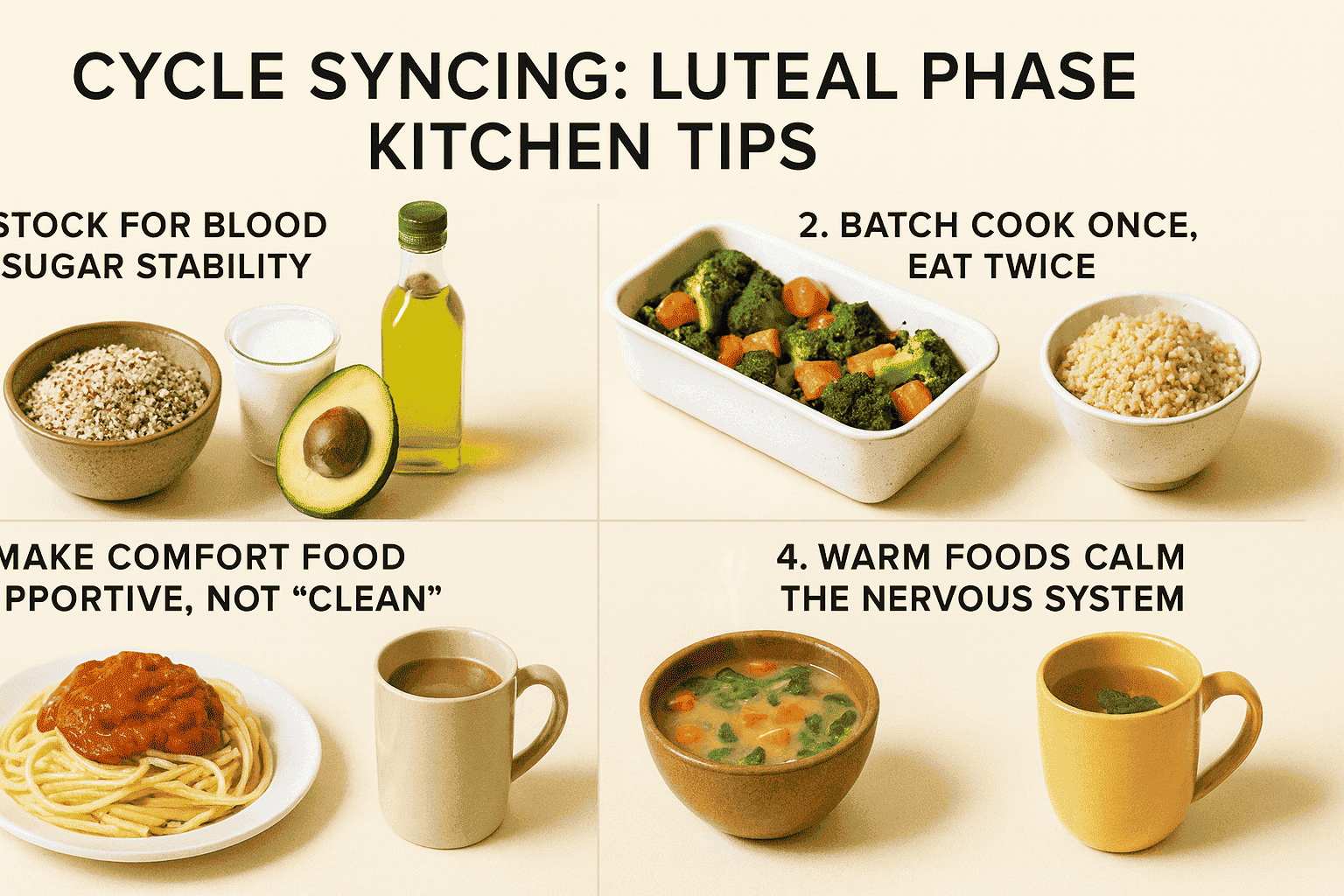
The key to making your luteal phase easier is having the right ingredients on hand. I like to keep my kitchen stocked with whole, grounding foods that help my hormones stay balanced and my digestion running smoothly.
Here are my go-to staples:
| Category | Staples | Why They Help |
| Carbs | Sweet potatoes, quinoa, brown rice, oats | Provide steady energy and support serotonin production |
| Protein | Lentils, eggs, salmon, turkey, tofu | Help maintain blood sugar and prevent cravings |
| Healthy Fats | Avocado, olive oil, nuts, seeds | Support hormone production and reduce inflammation |
| Fiber | Leafy greens, flaxseeds, chia seeds, apples | Aid digestion and remove excess hormones |
| Minerals | Pumpkin seeds, spinach, dark chocolate | Support mood and reduce PMS symptoms |
I always make sure to prep a few of these foods ahead of time, like cooking a big batch of quinoa or roasting sweet potatoes. That way, I can build nourishing meals quickly even on the days when my energy dips.
Foods That Support Digestion and Reduce Bloating
Digestive discomfort is one of the most common luteal phase complaints. I’ve found that the best way to reduce bloating is to choose foods that are gentle, warm, and easy to digest.
Here’s what works well for me:
- Cooked vegetables instead of raw salads, especially carrots, zucchini, and squash
- Fermented foods like sauerkraut or kefir to support gut health
- Magnesium-rich foods such as spinach, almonds, and bananas to ease muscle tension
- Fiber from fruits and seeds to keep digestion moving smoothly
I try to avoid foods that cause inflammation, like refined sugar or processed snacks. Instead, I focus on whole, soothing meals that keep my digestion calm. One of my favorite quick fixes is a warm bowl of lentil and vegetable soup. It always feels like a reset for my gut.
Spices and Herbs That Calm Inflammation and Soothe the Gut
I used to think spices were just for flavor. Now, they’re one of my favorite tools for balancing hormones and improving digestion. Certain spices and herbs can make a noticeable difference in how you feel during the luteal phase.
Here are some that I use regularly:
- Ginger helps ease bloating and supports healthy digestion
- Turmeric reduces inflammation and supports liver detoxification
- Cinnamon stabilizes blood sugar and calms cravings
- Fennel seeds help reduce gas and bloating
- Chamomile promotes relaxation and soothes the nervous system
I often start my mornings with warm water, lemon, and ginger. It wakes up my digestion and sets the tone for the day. I also add cinnamon to my oatmeal and turmeric to soups or golden milk before bed.
Luteal Phase Cooking Tips for Better Energy and Mood
Cooking during your luteal phase doesn’t have to be complicated. It’s about choosing meals that feel comforting, nourishing, and easy on your system.
Here are a few kitchen tips that have helped me stay balanced:
- Cook your food thoroughly. Warm meals are easier to digest than cold ones.
- Add grounding spices like cinnamon, nutmeg, and turmeric.
- Use healthy fats generously. Olive oil, avocado, and ghee are all hormone-friendly.
- Batch cook when your energy is higher earlier in the phase.
- Stay hydrated with herbal teas like chamomile or peppermint.
- Don’t skip snacks. Pair protein and carbs to keep your blood sugar steady.
Once I started following these rhythms, my PMS irritability dropped significantly. Instead of feeling foggy and tired, I felt nourished and clear-headed.
Warm, Grounding Meal Ideas to Try
The week before your period is the perfect time for comfort foods that also support your hormones. I love focusing on warm, nutrient-dense meals that help me feel grounded and satisfied.
Here are some of my favorites:
Breakfast
- Oatmeal with banana, flaxseeds, and almond butter
- Scrambled eggs with spinach and avocado
- Quinoa porridge with walnuts, honey, and cinnamon
Lunch
- Lentil soup with sweet potatoes and kale
- Brown rice bowl with salmon and tahini dressing
- Chickpea stew with carrots and spinach
Dinner
- Turkey chili with beans and tomato
- Baked salmon with roasted broccoli and quinoa
- Vegetable curry with coconut milk and turmeric
Snacks
- Dark chocolate with almonds
- Apple slices with peanut butter
- Greek yogurt with oats and honey
These meals keep me full, calm my cravings, and help my digestion stay smooth. I feel more grounded and emotionally stable when I eat this way.
Drinks and Teas That Soothe Mood Swings and Bloating
Teas have become one of my favorite luteal phase rituals. They’re calming, hydrating, and full of nutrients that support mood and digestion.
Here are a few blends that work wonders for me:
- Chamomile tea for relaxation and better sleep
- Ginger tea to improve digestion and ease cramps
- Peppermint tea to reduce bloating and soothe the stomach
- Cinnamon tea to balance blood sugar and calm cravings
- Raspberry leaf tea to tone the uterus and ease PMS
I make a big pot in the morning and sip throughout the day. It feels grounding and helps me slow down, which is exactly what my body needs in this phase.
FAQs
What foods help with bloating before my period?
Focus on cooked vegetables, leafy greens, and magnesium-rich foods like bananas and pumpkin seeds. Avoid excess salt and processed foods.
How can I improve digestion in the luteal phase?
Eat warm, cooked meals instead of raw foods, add fiber gradually, and drink plenty of water or herbal teas. Ginger and fennel are great for soothing the gut.
Which ingredients help with mood swings?
Foods high in magnesium, healthy fats, and vitamin B6, like avocado, salmon, and leafy greens, help stabilize mood and reduce irritability.
Final Thoughts
The luteal phase is a time to listen more closely to your body. I used to see it as the most difficult part of my cycle, but now it’s the one I value most. It’s my reminder to slow down, cook with care, and nourish myself instead of pushing harder.
Your kitchen can be a powerful space for hormone balance. When you fill it with warm, grounding foods and calming rituals, you turn premenstrual discomfort into an opportunity for restoration.
When you sync your meals and habits with your body’s rhythm, you’ll find that your mood, digestion, and energy naturally begin to flow in harmony again.