Table of Contents
What Is PMDD and Why It’s Often Misunderstood
When i first started cycle syncing and pmdd managing severe symptoms naturally and working with women struggling with PMDD (Premenstrual Dysphoric Disorder), I realised most of them had spent years being told they just had “bad PMS.” But PMDD isn’t just moodiness or cramps, it’s an intense, hormonal storm that can bring I’ve seen clients who felt like a completely different person every luteal phase. They’d describe it as “losing control” of their emotions, feeling anxious, irritable, or detached. For many, that sense of hopelessness disappears once bleeding begins, confirming it’s not “in their head” it’s hormonal.
PMDD happens when the brain becomes overly sensitive to the natural hormonal fluctuations of progesterone and oestrogen in the luteal phase. These hormones affect neurotransmitters like serotonin and GABA, which influence mood and emotional regulation. When the balance is disrupted, the result can be severe mood swings, brain fog, and deep exhaustion.
Cycle syncing became one of the most powerful ways to help them regain balance. By tracking symptoms, adjusting nutrition, and scheduling recovery during the luteal phase, women can anticipate the emotional dip and support their bodies with magnesium, complex carbs, rest, and mindful practices instead of blame or confusion.
Most importantly, recognising PMDD as a real, biological condition not a personality flaw gives women the compassion and tools they need to heal and live in sync with their hormonal rhythm.
How Cycle Syncing Helps with PMDD Symptoms
Cycle syncing is about aligning your nutrition, movement, and self care habits with your body’s hormonal fluctuations. For women with PMDD, this awareness is a lifeline.
When you understand what your hormones are doing, especially progesterone and estrogen you can adjust your lifestyle before symptoms hit.
For instance, during the luteal phase (the 10–14 days before your period), progesterone rises and can influence mood, sleep, and digestion. Supporting your body at this stage with grounding foods, slower workouts, and calming routines can dramatically reduce PMDD intensity.
Understanding the Four Phases of Your Cycle
Here’s how I explain it to my clients simple, visual, and practical:
| Phase | Hormone Highlights | How You May Feel |
| Menstrual (Days 1-5) | Low estrogen and progesterone | Fatigued, introspective |
| Follicular (Days 6-14) | Rising estrogen | Energised, creative |
| Ovulatory (Days 15-17) | Peak estrogen | Confident, outgoing |
| Luteal (Days 18-28) | Progesterone dominates | Tired, moody, emotional |
Self Care Focus
- Rest, hydration, iron rich foods
- Cardio, planning, social time
- Light meals, social energy
- Gentle movement, magnesium-rich foods
PMDD tends to strike hardest in the luteal phase, when estrogen drops and progesterone peaks. This hormonal shift can trigger neurotransmitter changes particularly serotonin which affect mood.
Natural Ways to Manage PMDD : What Actually Works
Over the years, I’ve seen many women try quick fixes essential oils, teas, or “miracle” supplements but PMDD relief requires consistency and alignment.
Here’s what actually works in practice:
1. Cycle Syncing Meal Plans
A hormone supportive diet makes a difference. Focus on:
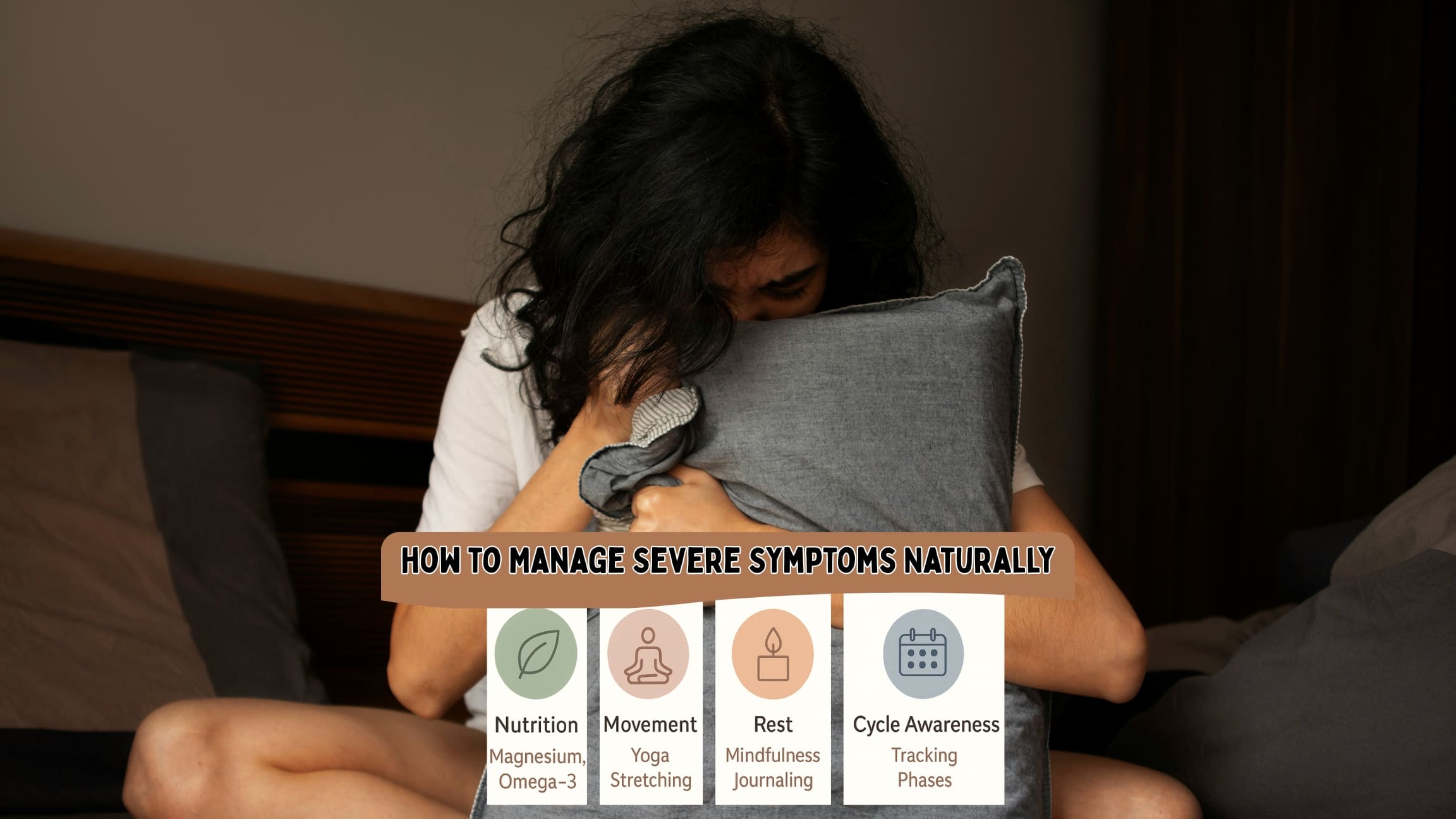
- Omega 3 fats (salmon, flaxseeds, walnuts) to regulate mood
- Magnesium rich foods (dark chocolate, pumpkin seeds, leafy greens) to calm nerves
- B vitamins and zinc to support hormone metabolism
These are simple, daily tools to balance your chemistry, not temporary band aids.
2. Movement by Phase
Instead of pushing through fatigue, sync workouts:
- Menstrual: walking, yoga
- Follicular: strength and HIIT
- Ovulatory: dance or cardio bursts
- Luteal: Pilates, stretching, rest days
3. Mind Body Techniques
Meditation, breathwork, or journaling during the luteal phase can anchor emotional stability. One of my clients created a “luteal self care box” with herbal tea, affirmations, and lavender oil became her emotional safety net.
Foods, Supplements, and Lifestyle Adjustments That Support Hormone Balance
Here are the most effective natural remedies for PMDD, based on what I’ve used both personally and professionally:
- Calcium and Magnesium: clinically proven to reduce PMS and PMDD mood symptoms.
- Vitex (Chaste Tree Berry): helps balance estrogen and progesterone levels.
- B6 and B12: essential for neurotransmitter function and energy.
- Ashwagandha: supports adrenal balance and stress regulation.
- Hormone balancing foods: cruciferous vegetables (broccoli, kale, cauliflower), avocado, and fiber rich grains.
Lifestyle matters just as much:
- Prioritise sleep (your hormones repair overnight).
- Limit caffeine and alcohol (they intensify anxiety and bloating).
- Stay consistent, don’t start five new habits in one week. Choose one or two.
Adding gentle movement, like yoga or walks, improves blood flow and reduces cortisol. Mindful journaling can also help track emotional patterns and identify triggers. Over time, these small, steady adjustments make hormonal balance and emotional stability much easier to maintain.
My Experience as a Woman Who’s Been There)
As a woman who also experienced PMDD personally, I can tell you: there’s no single “cure.” What worked for me was tracking my cycle religiously and noticing patterns. For example, around day 22, I’d start feeling flat or restless. Instead of fighting it, I planned quieter days, more writing, less socialising.
Once I respected my biology rather than forcing productivity, my symptoms softened.
I also guided clients through similar transitions using cycle syncing journals and meal plans designed for each phase. Some even reported that by the third month of consistent syncing, their partners noticed the change before they did.
When to See a Doctor or Naturopath for PMDD
If your symptoms include suicidal thoughts, severe anxiety, or depression, see a healthcare provider immediately.
PMDD can mimic mood disorders, and sometimes medication (like SSRIs) or hormone therapy is necessary alongside natural methods.
For holistic care, consult a naturopathic doctor experienced in women’s hormonal health. They can assess deficiencies, thyroid function, and gut balance all of which influence estrogen metabolism.
Key Takeaways
- PMDD Is Real, Not “Just PMS” : It’s a hormonal sensitivity affecting mood, energy, and focus. Recognising this distinction helps women seek proper support rather than self-blame.
- Professional Guidance Matters : Severe symptoms like anxiety or depression require medical attention. Combining medical and holistic care often delivers the best long-term results.
- Cycle Awareness Builds Control : Tracking your luteal phase, nourishing your body with magnesium-rich foods, and prioritising rest can reduce emotional crashes and physical fatigue. Understanding your hormonal rhythm is the first step toward healing and balance.
Remember, combining medical and natural approaches often yields the best long term results.
Faqs about Cycle Syncing and PMDD
1. What doctor should I see for PMDD?
Start with a gynaecologist for diagnosis, then consider an integrative doctor or naturopath for holistic treatment options.
2. Can diet really help PMDD?
Yes. Nutrient dense, hormone balancing foods stabilise blood sugar and support neurotransmitter health, directly improving mood swings and energy.
3. How long before I notice results from cycle syncing?
Most women feel calmer and more in control after two to three cycles of consistent tracking and phase aligned habits.
Final thoughts
In my experience, cycle syncing isn’t just about managing PMDD it’s about reclaiming agency over your body.
You stop fearing the calendar and start anticipating how to support yourself each phase. You learn that self care isn’t indulgence, it’s hormonal maintenance.
When women understand their biology, they stop blaming themselves for being “too emotional” or “unproductive.” They become attuned, resilient, and self aware.
If you’re struggling with PMDD, know this: you’re not broken, and you’re not alone. With education, self tracking, and gentle consistency, it’s possible to feel steady even when your hormones aren’t, especially when you focus on mindful self care throughout each phase.