Table of Contents
Your nutritional needs aren’t static throughout the month—they shift along with your hormones, energy levels, and metabolic demands. While the research on cycle-specific nutrition is still evolving, emerging studies suggest that aligning your food choices with your menstrual cycle phases may help optimize energy, reduce symptoms, and support overall hormonal health.
Understanding how your body’s needs change throughout your cycle can transform your relationship with food from restrictive rules to intuitive nourishment that works with your natural rhythms.
The Science Behind Cycle Nutrition
Your menstrual cycle creates distinct nutritional demands as hormones fluctuate and your body’s metabolic processes shift. Research shows several key changes that affect your nutritional needs:
Metabolic rate variations: Studies indicate that metabolic rate can increase by 5-10% during the luteal phase, meaning your body naturally burns more calories and may need additional fuel.
Insulin sensitivity changes: Research suggests insulin sensitivity may be higher during the follicular phase and lower during the luteal phase, affecting how your body processes carbohydrates.
Micronutrient demands: Menstruation creates iron losses, while hormonal fluctuations affect the body’s use of magnesium, B vitamins, and other essential nutrients.
Neurotransmitter production: Hormone changes influence serotonin and dopamine production, affecting mood and cravings—your body may genuinely need different foods to maintain emotional balance.
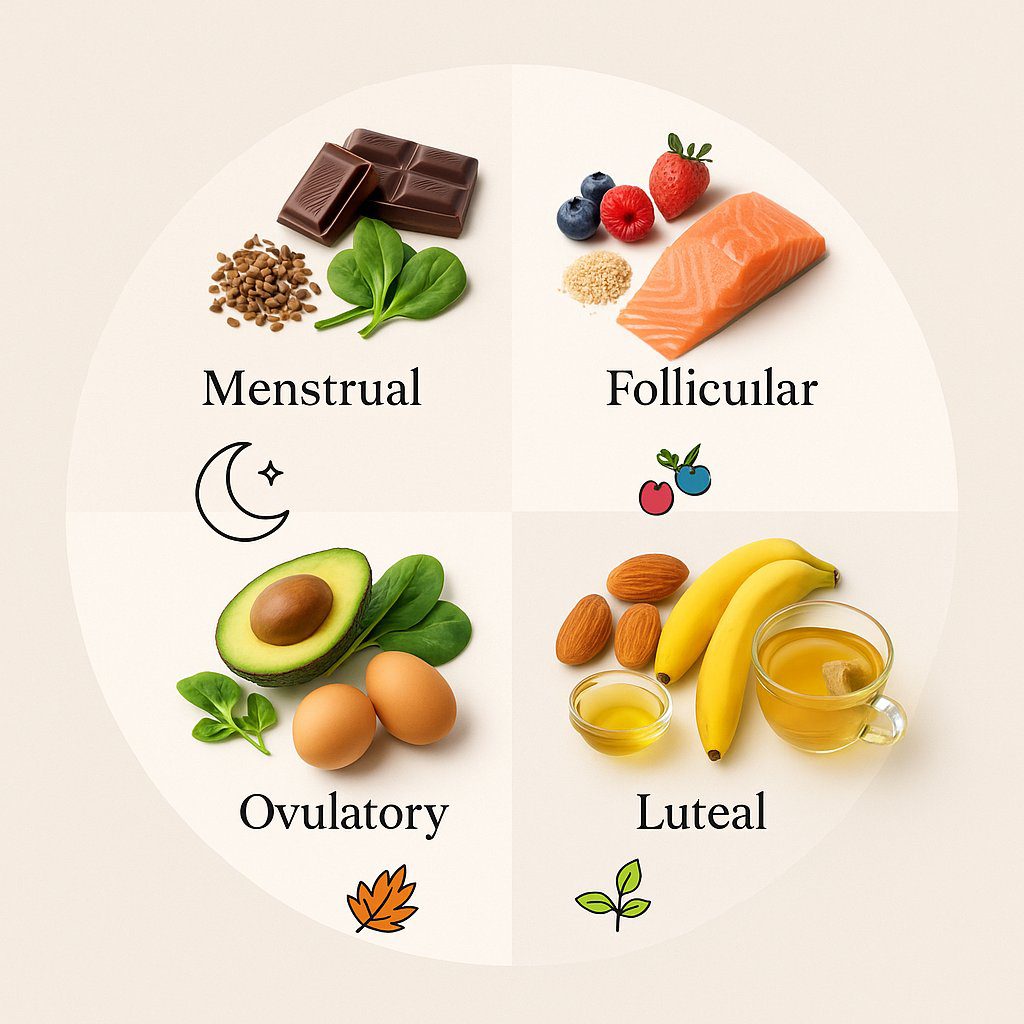
Menstrual Phase Nutrition (Days 1-7)
What your body needs: During menstruation, your body is working hard to shed the uterine lining while beginning the next cycle. Iron stores become depleted, inflammation may increase, and energy often dips.
Key Nutritional Priorities
Iron replenishment: You lose iron through menstrual blood, making iron-rich foods essential. Research shows that even people with normal iron levels can benefit from increased iron intake during menstruation.
Anti-inflammatory foods: Prostaglandins (compounds that cause cramping) increase during menstruation. Foods with anti-inflammatory properties may help reduce discomfort.
Gentle, warming foods: Many people naturally crave comforting foods during menstruation, which may reflect the body’s need for easily digestible, nourishing meals.
Best Food Choices
Iron-rich options:
- Red meat, poultry, and fish (heme iron, which is more easily absorbed)
- Dark leafy greens like spinach and kale
- Legumes such as lentils and chickpeas
- Pumpkin seeds and sesame seeds
- Dark chocolate (an added mood boost!)
Anti-inflammatory foods:
- Fatty fish like salmon and sardines
- Turmeric and ginger
- Tart cherries and berries
- Leafy greens and colorful vegetables
Comfort foods that nourish:
- Bone broth or vegetable broths
- Warming stews and soups
- Herbal teas like ginger or chamomile
- Cooked grains like quinoa and brown rice
Pro tip: Pair iron-rich foods with vitamin C sources (citrus, bell peppers, strawberries) to enhance absorption, and avoid coffee or tea with iron-rich meals as they can inhibit absorption.
Follicular Phase Nutrition (Days 1-13)
What your body needs: As estrogen begins to rise, your energy typically increases and your body becomes more insulin-sensitive. This is often when people feel most motivated to try new foods and maintain healthy eating patterns.
Key Nutritional Priorities
Supporting rising estrogen: Your body is ramping up hormone production and preparing for ovulation. Nutrients that support healthy estrogen metabolism become important.
Stable energy: With improving insulin sensitivity, this is an ideal time to focus on complex carbohydrates and balanced meals.
Liver support: Your liver works to metabolize hormones, so supporting liver function with specific nutrients can be beneficial.
Best Food Choices
Hormone-supporting foods:
- Cruciferous vegetables (broccoli, cauliflower, Brussels sprouts) contain compounds that support healthy estrogen metabolism
- Flax seeds and pumpkin seeds provide lignans and healthy fats
- Citrus fruits offer vitamin C and bioflavonoids
Energy-sustaining options:
- Complex carbohydrates like oats, quinoa, and sweet potatoes
- Fresh fruits and vegetables
- Lean proteins like fish, poultry, and plant-based options
Liver-supporting foods:
- Sulfur-rich vegetables (garlic, onions, cruciferous vegetables)
- Beets and carrots
- Green tea
- Artichokes and dandelion greens
Ovulatory Phase Nutrition (Around Day 14)
What your body needs: During ovulation, estrogen peaks and then drops while luteinizing hormone surges. Your body is at peak fertility and often peak energy. This is typically when appetite may be naturally lower and you might crave lighter, fresher foods.
Key Nutritional Priorities
Supporting peak hormone production: Your body is producing high levels of reproductive hormones and needs specific nutrients to support this process.
Antioxidant protection: The ovulation process creates some oxidative stress, making antioxidant-rich foods particularly valuable.
Light, energizing foods: Many people naturally crave fresher, lighter foods during ovulation, which may reflect the body’s efficiency at this time.
Best Food Choices
Antioxidant-rich options:
- Colorful berries and cherries
- Dark leafy greens
- Green tea and matcha
- Dark chocolate and cacao
Light, fresh foods:
- Raw fruits and vegetables
- Salads with varied colorful vegetables
- Fresh herbs like parsley, cilantro, and basil
- Smoothies with fruits and greens
Hormone-supporting nutrients:
- Zinc-rich foods like pumpkin seeds and shellfish
- Vitamin E sources like almonds and sunflower seeds
- Folate-rich foods like asparagus and avocado
Luteal Phase Nutrition (Days 15-28)
What your body needs: Progesterone rises during this phase, often increasing appetite and cravings. Metabolic rate increases, insulin sensitivity may decrease, and serotonin production can drop, affecting mood and food desires.
Key Nutritional Priorities
Stabilizing blood sugar: With decreased insulin sensitivity, focusing on balanced meals becomes especially important to avoid energy crashes and mood swings.
Supporting serotonin production: As serotonin drops, your body may crave carbohydrates to boost production of this mood-regulating neurotransmitter.
Managing increased appetite: Your body genuinely needs more calories during this phase—honor that while choosing nourishing options.
PMS symptom support: Certain nutrients can help reduce common luteal phase symptoms like bloating, mood changes, and breast tenderness.
Best Food Choices
Blood sugar stabilizers:
- Protein with every meal and snack
- Complex carbohydrates paired with fat or protein
- Nuts, seeds, and nut butters
- Legumes and whole grains
Mood-supporting foods:
- Complex carbohydrates like sweet potatoes and quinoa (support serotonin production)
- Omega-3 rich foods like salmon and walnuts
- Magnesium-rich options like dark chocolate, almonds, and leafy greens
- B-vitamin sources like eggs and nutritional yeast
PMS symptom relief:
- Calcium-rich foods like sesame seeds, sardines, and leafy greens
- Potassium sources like bananas and potatoes (help reduce bloating)
- Anti-inflammatory foods like turmeric and ginger
- Magnesium sources to help with cramping and mood
Smart carbohydrate choices:
- Roasted root vegetables
- Steel-cut oats with nuts and seeds
- Whole grain pasta with protein and vegetables
- Dark chocolate (in moderation) for magnesium and mood support
General Principles for Cycle Nutrition
Stay Hydrated Throughout
Your hydration needs may vary slightly throughout your cycle. Some people retain more water during the luteal phase, while others need extra fluids during menstruation. Listen to your body and aim for consistent hydration.
Quality Over Perfection
Rather than rigidly following phase-specific eating, focus on overall food quality and listen to your body’s changing needs. Cravings often contain valuable information about what your body needs.
Individual Variation Matters
These guidelines reflect general patterns, but your individual needs may differ. Factors like stress, sleep, exercise, and health conditions all influence your nutritional requirements.
Timing Flexibility
Don’t stress if you can’t eat “perfectly” for each phase. Even small adjustments—like adding more iron-rich foods during menstruation or choosing complex carbs during the luteal phase—can make a difference.
Common Mistakes to Avoid
Restricting during the luteal phase: Your body genuinely needs more calories during this time. Restricting can worsen PMS symptoms and disrupt hormones.
Ignoring cravings entirely: While not all cravings need to be indulged, they often signal genuine nutritional needs. Chocolate cravings might indicate magnesium needs, for example.
One-size-fits-all approaches: What works during one phase might not serve you during another. Flexibility is key.
Perfectionism: Cycle syncing should reduce stress, not create it. Aim for gentle adjustments rather than rigid rules.
Your Next Steps
Start by paying attention to your natural appetite and cravings throughout your cycle. Notice when you feel hungrier, when you crave certain foods, and when lighter meals feel more appealing.
Begin with small adjustments that feel sustainable—perhaps adding iron-rich foods during menstruation or choosing comforting complex carbs during the luteal phase. As you become more aware of your patterns, you can fine-tune your approach.
Remember that cycle syncing nutrition isn’t about perfect adherence to specific foods for each phase. It’s about developing a more intuitive relationship with food that honors your body’s changing needs throughout the month.
The goal is to work with your body’s natural rhythms rather than against them, using food as a tool to support your energy, mood, and overall wellbeing throughout every phase of your cycle.