Table of Contents
What is Cycle Syncing and Why It Matters for PCOS
I still remember when I first learned about cycle syncing the idea that women can align their lifestyle habits, workouts, and nutrition with the natural hormonal phases of their menstrual cycle. At the time, I was struggling with PCOS (Polycystic Ovary Syndrome), feeling constantly out of sync: exhausted some days, restless on others, and frustrated by irregular cycles.
Cycle syncing changed the way I approached my health. Instead of fighting my hormones, I began working with them. For women with PCOS, this is especially powerful. Our hormones often fluctuate unpredictably, but by syncing with the natural rhythm of the body even if it’s irregular you can reduce symptoms, restore balance, and feel more in control of your wellbeing.
Understanding the Menstrual Phases and Hormonal Patterns
Even if your cycle is irregular, understanding the four key phases can help guide your rhythm:
| Phase | Hormones | How You Typically Feel |
| Menstrual (Days 1–5) | Low estrogen & progesterone | Fatigue, introspection |
| Follicular (Days 6–13) | Rising estrogen | Energized, optimistic |
| Ovulatory (Days 14–17) | Peak estrogen | Social, confident |
| Luteal (Days 18–28) | Progesterone dominance | Tired, reflective |
Focus Areas
- Rest, journaling, gentle movement
- New projects, light workouts
- Networking, high intensity workouts
- Calm tasks, self care, decluttering
How PCOS Disrupts the Cycle (and How to Rebalance It)
Women with PCOS may not experience these phases consistently, but tracking your temperature, cervical mucus, and mood helps you approximate your body’s rhythm. Over time, this builds awareness and that’s the first step toward balance.
PCOS often causes anovulation, meaning your body doesn’t release an egg each cycle. This throws off estrogen, progesterone, and testosterone balance, leading to symptoms like:
- Weight gain or difficulty losing weight
- Hair loss or unwanted hair growth
- Fatigue and mood swings
- Irregular or absent periods
In my experience, the key isn’t to “force” a textbook 28 day cycle, it’s to create hormonal stability. I did this through consistent sleep, mindful nutrition, and identifying my body’s subtle cues of change (like slight energy shifts or appetite changes).
Cycle syncing doesn’t cure PCOS, but it can soften its impact. It teaches your body predictability, which supports hormone balance over time
Natural Ways to Manage PCOS Through Cycle Syncing
Here’s how I began managing my PCOS naturally:
1. Nutrition Syncing
During the follicular and ovulatory phases, I focused on foods that support liver detoxification like leafy greens, flaxseeds, and cruciferous vegetables to help the body metabolize excess estrogen.
In the luteal and menstrual phases, I increased magnesium rich foods (dark chocolate, pumpkin seeds, leafy greens) to ease cramps and stabilize mood.
2. Exercise by Phase
- Follicular: I did upbeat, energizing workouts like Pilates or light cardio.
- Ovulatory: I pushed harder HIIT or strength training felt natural.
- Luteal: I eased into yoga or walks.
- Menstrual: I rested guilt free.
This rhythm prevented burnout and supported consistent energy, even with hormonal fluctuations.
3. Sleep and Stress Regulation
PCOS thrives on cortisol imbalance. I learned that 7–9 hours of deep, consistent sleep was more effective than any supplement I tried. Daily mindfulness and journaling became non-negotiable.
4. Supplements and Herbs (as Advised by My Doctor)
I used inositol, vitamin D, and omega 3s, but always with medical supervision. These can improve insulin sensitivity and ovulation regularity.
Nutrition and Lifestyle Adjustments for Each Phase
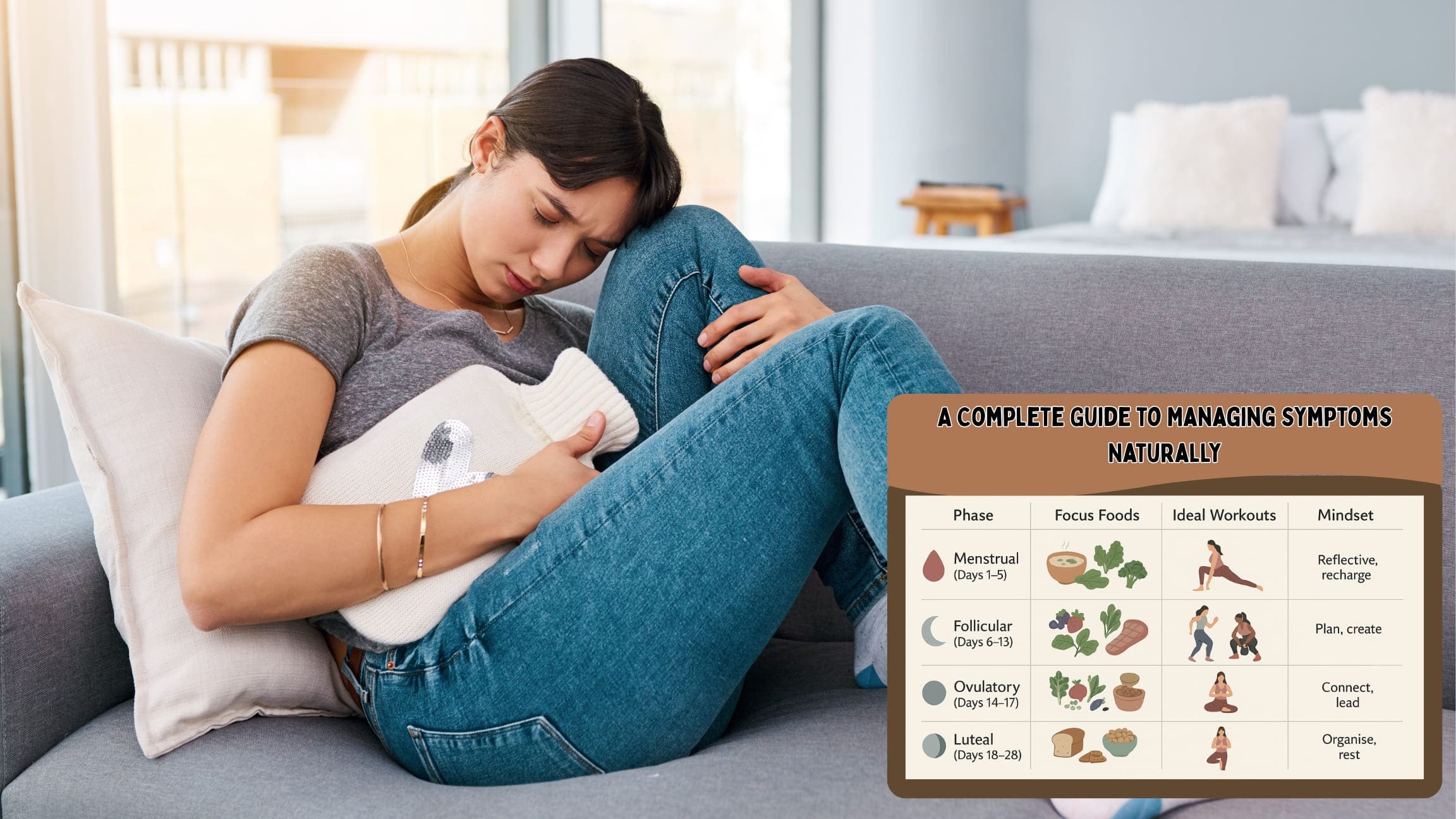
| Phase | Focus Foods | Ideal Workouts |
| Menstrual | Soups, iron rich veggies, warm teas | Stretching, rest |
| Follicular | Berries, leafy greens, lean proteins | Light cardio, Pilates |
| Ovulatory | Fiber rich veggies, protein, zinc | HIIT, social workouts |
| Luteal | Complex carbs, magnesium, B vitamins | Yoga, walks |
Mindset
- Reflective, recharge
- Plan, create
- Connect, lead
- Organise, rest
Even if your period skips a month, you can still follow this pattern intuitively by tracking your symptoms and energy levels and adjusting your nutrition to support each phase.
My Personal Insights : What Worked and What Didn’t
I’ve met many women who thought they had “failed” at cycle syncing because their periods weren’t regular. The truth? There’s no failure, only feedback. Every cycle teaches you something about how your body responds to stress, food, rest, and emotional load. For me, the biggest change wasn’t physical first; it was mental. I had to stop pushing through fatigue and start respecting rest. Once I did, my body started cooperating instead of resisting. Within three months, my PMS symptoms dropped, my energy evened out, and my cycles became more predictable.
What didn’t work was expecting results overnight. Hormonal healing is slow, intentional work; it doesn’t follow the same instant-gratification mindset we’re conditioned to. I tried doing too much at once: changing my diet, adding new workouts, tracking everything daily. It only led to frustration. The real progress came when I simplified focusing on one change per phase, staying consistent, and letting my body adjust naturally.
I also learned that stress management is the hidden key to hormonal balance. No supplement can override chronic stress. Once I started syncing my work and rest patterns scheduling lighter tasks during my luteal phase and creative projects during follicular everything clicked. I stopped fighting my biology and began collaborating with it.
Listening to women’s stories reinforced that cycle syncing isn’t a rigid formula; it’s a rhythm. For some, it means early bedtime and journaling; for others, it’s strategic workouts and meal timing. There’s no single “perfect cycle” , just the one that works for you.
Practical Tools for Tracking and Staying Consistent
If you’re new to cycle syncing, start small. Awareness is the first step, and consistency comes next. Here are the tools I’ve found most helpful both personally and through others’ experiences:
- Apps : My go-to recommendations are Clue, Flo, and Natural Cycles. Each helps track your period, fertile window, and symptoms. I personally prefer Clue for its data depth and user-friendly graphs, while Natural Cycles is excellent if you’re using cycle syncing for birth control.
- Cycle Journals: Digital apps can track data, but journaling captures emotion. I encourage writing down your mood, cravings, and focus levels daily. Over time, patterns emerge and you’ll see which days bring confidence, creativity, or fatigue. That awareness helps you plan life with intention.
- Sync Planners: Use a weekly or monthly planner aligned with your hormonal phases. For example, plan new projects during the follicular phase, presentations during ovulation, and reflection or self-care during the luteal and menstrual phases. It’s a game-changer for productivity and mental clarity.
- Body Awareness Tools: A basal thermometer, ovulation test strips, or even wearable trackers (like Garmin or Oura Ring) help monitor temperature and sleep quality giving insight into hormone shifts.
Beyond the tools, mindset matters most. I always remind myself: consistency beats intensity. Track for at least three full cycles before adjusting anything. The first month is observation, the second builds awareness, and by the third, you start syncing with confidence.
I’ve also noticed how women thrive when they give themselves grace. You don’t have to track perfectly or live phase-by-phase. Even small acts like eating more whole foods, sleeping an extra hour during your period, or saying no when you’re drained are part of cycle syncing.
The Bigger Lesson
Cycle syncing isn’t about becoming a perfect version of yourself; it’s about becoming aligned. When you stop seeing your hormones as obstacles and start viewing them as allies, everything changes your energy, mood, and even your self-trust.
Some months, your body will surprise you. Ovulation might shift, your period might come early, and that’s okay. It’s your body’s way of communicating. The more you listen, the better you’ll respond.
If I’ve learned anything, it’s that healing happens through awareness, not control. You don’t need to do more, you need to do what feels right for your phase. Once you master that, you’ll realise that cycle syncing isn’t just about hormones; it’s about harmony.
Faqs about Cycle Syncing for PCOS
1. Can women with PCOS get pregnant naturally through cycle syncing?
Yes, by improving hormonal balance and ovulation regularity, many women increase their fertility naturally. However, results vary, and medical support is often essential.
2. How long does it take to see improvements with cycle syncing?
Most women notice better energy and reduced PMS within 2 – 3 cycles. Full hormonal rebalance may take 6 – 12 months depending on lifestyle consistency.
3. What are the best natural remedies for PCOS?
Focus on nutrition (low glycaemic diet), exercise, stress management, and supplements like inositol or omega 3s. Always consult your healthcare provider before starting anything new.
Final thoughts
Cycle syncing for PCOS taught me one simple truth: my body wasn’t the problem, it just needed to be understood. Once I started listening, I realised how much control I actually had.
If you’re navigating PCOS, don’t chase perfection or compare your progress. Instead, aim for small, steady steps. Every balanced meal, mindful rest day, or moment of self awareness is progress.
Over time, you’ll not only manage PCOS naturally you’ll rebuild trust with your body and learn to flow with it, not fight against it